
Current Jail Conditions
The Payette County Jail was built in 1972 and expanded in 1999. The facility has a rated capacity of 69 beds and houses men and women across multiple custody and classification levels. After more than 50 years of use, the building faces significant limitations related to capacity, layout, supervision, security, accessibility and aging building systems.
Quick Facts
1972 - Original jail construction.
1999 - Last major expansion.
69 Beds - Rated capacity of the jail.
50+ Years - Number of years the jail has been in continuous use.
4 continuous years of failed jail inspections.
2026 Jail Inspection
The March 16, 2026 Idaho Jail Inspection Report identified significant concerns with the condition and operation of the facility. The inspection concluded:
“In its current condition, I do not see how the current Payette County Jail will ever pass a jail inspection.”
Key Facility Challenges
Capacity and Classification
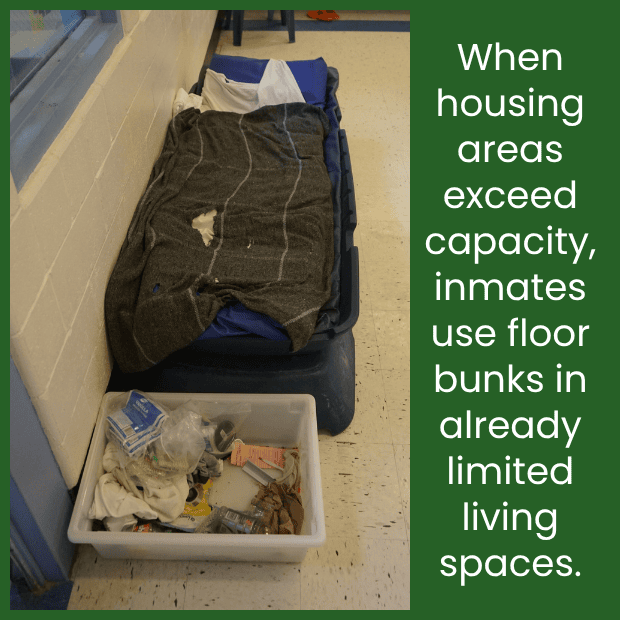
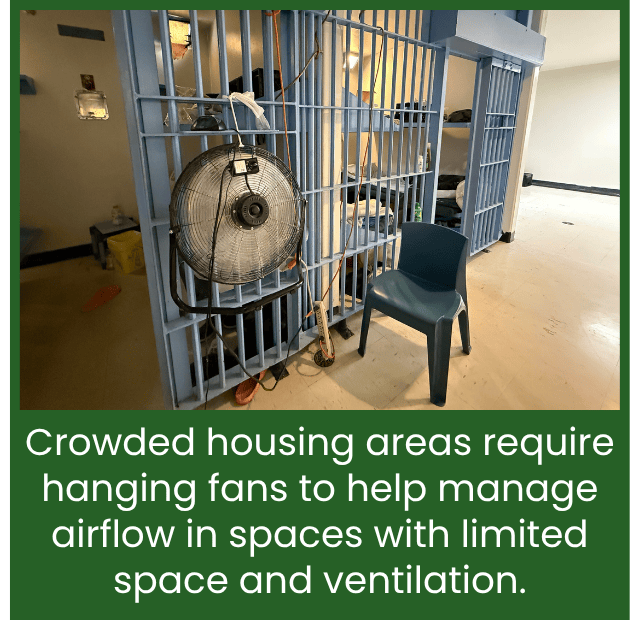
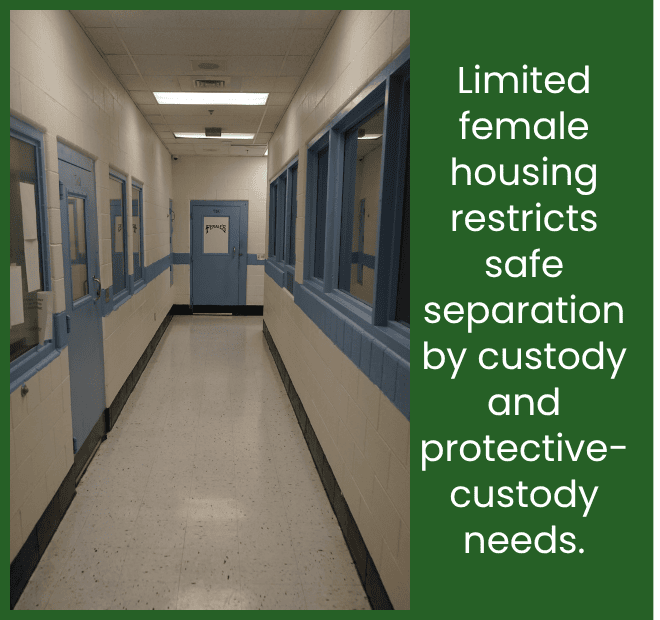
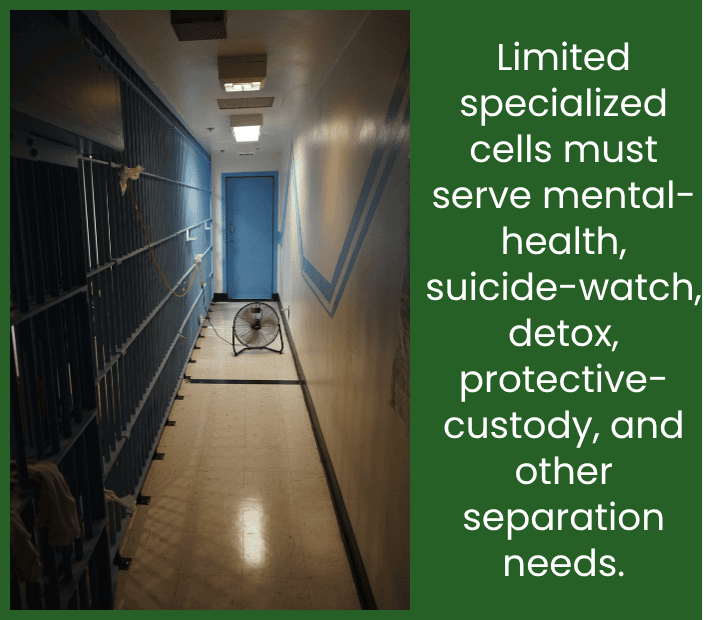
The jail regularly operates at or near capacity, but overcrowding can occur within individual housing areas even when the total inmate count is below 69. Limited housing options make it difficult to separate women, protective-custody inmates, high-risk inmates and other classifications, while updated space standards have also reduced the number of people some older cells can hold. These limitations require more inmate movement and make day-to-day housing decisions more difficult.
Intake and Booking
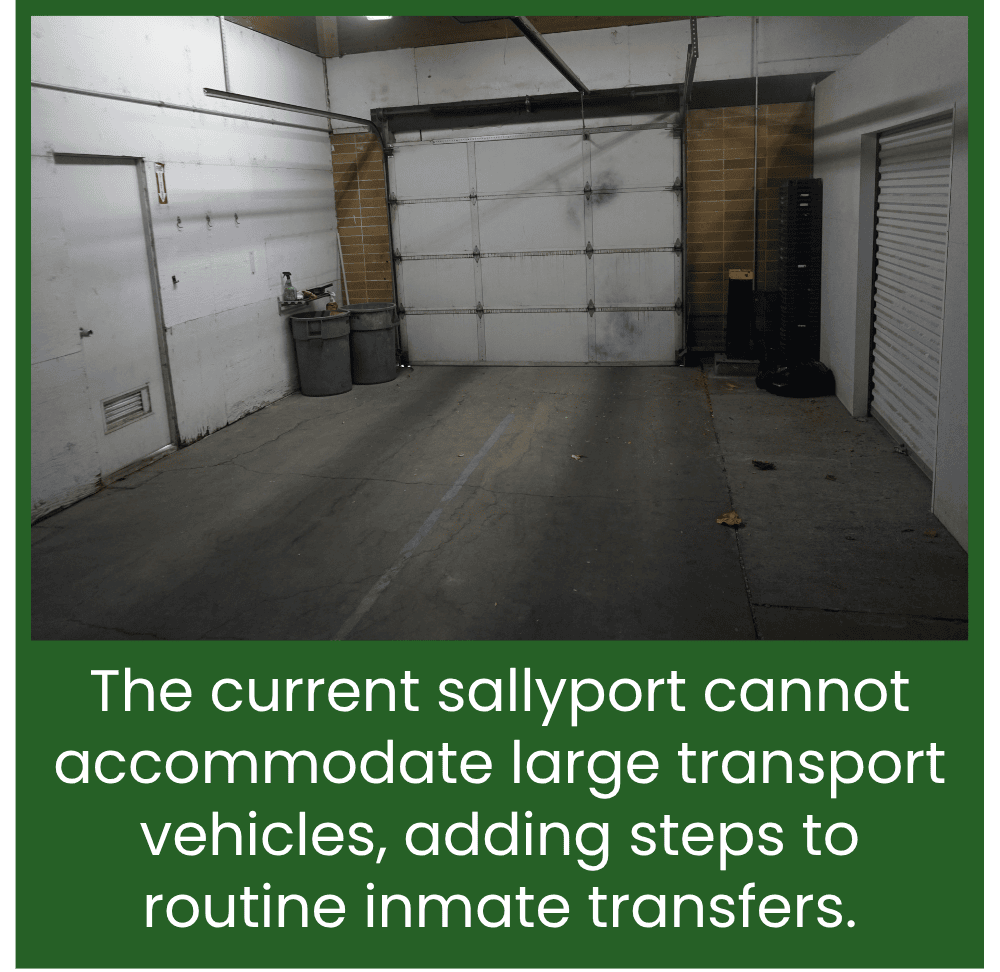
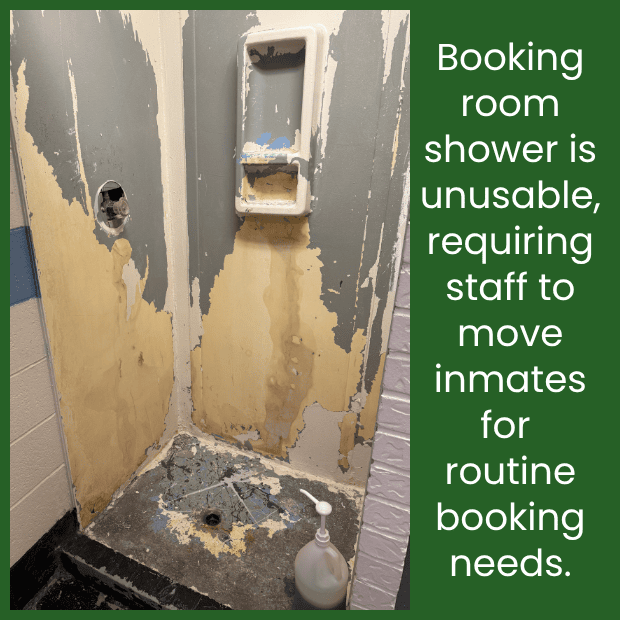
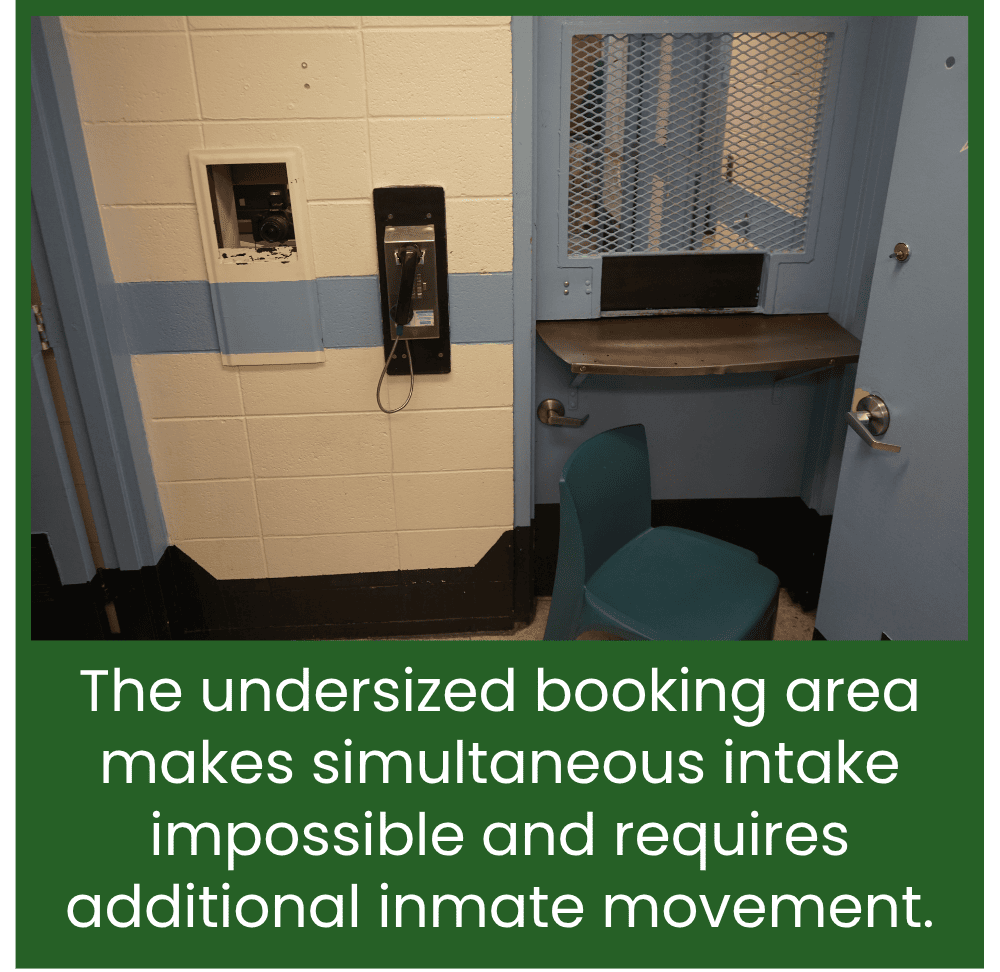
The booking area is too small to efficiently handle multiple arrivals at once, often requiring staff to move or temporarily secure one inmate so another can be processed. The vehicle sallyport is also too small for large transport buses and ambulances, while narrow corridors and floor thresholds complicate movement of restrained inmates and medical equipment. These conditions add staff time and make a high-risk part of jail operations more difficult to manage.
Supervision
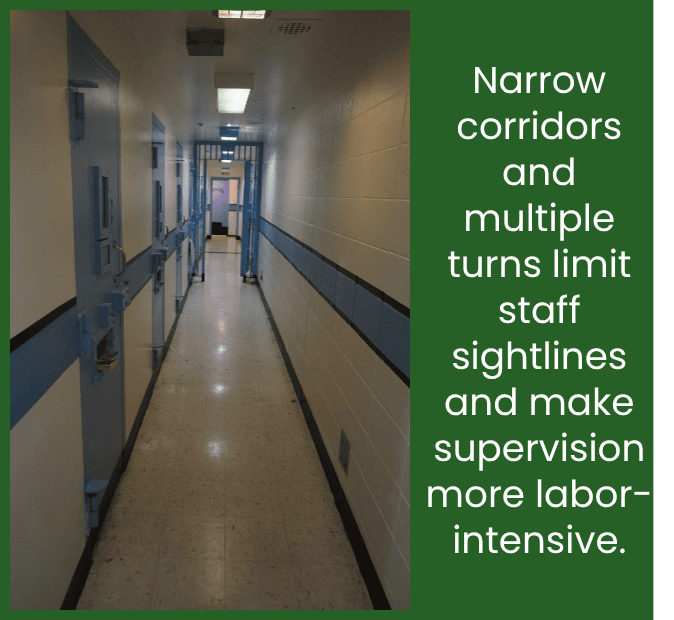
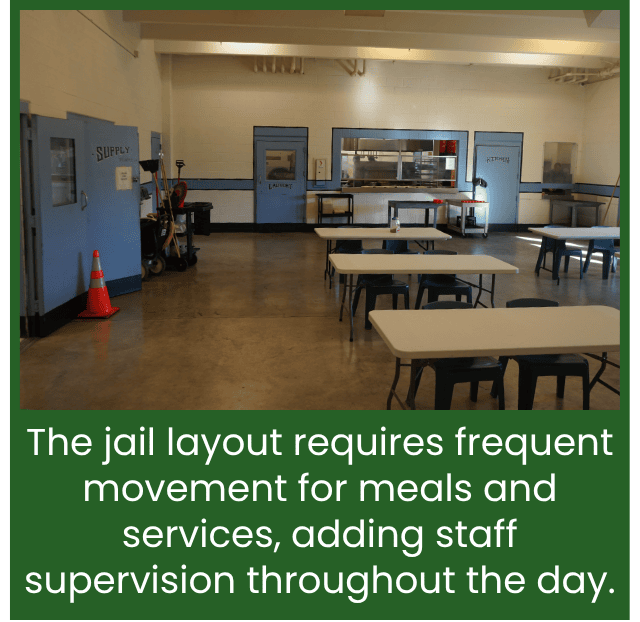
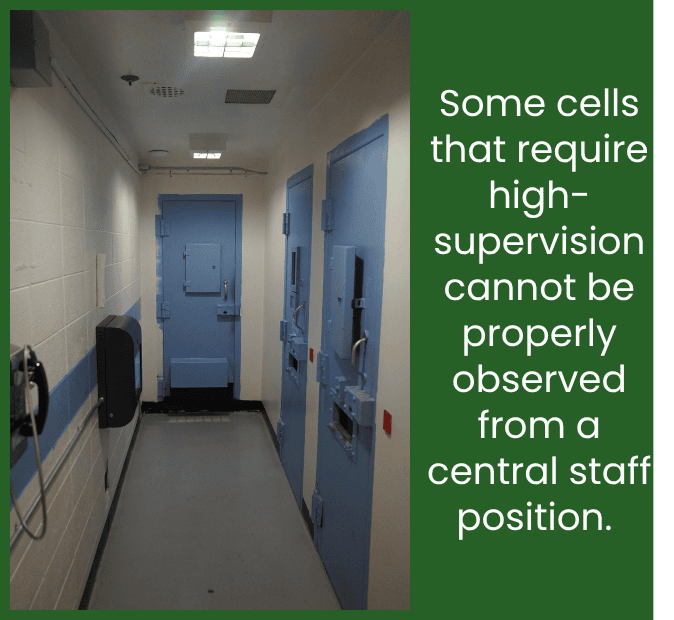
The jail’s narrow corridors, multiple turns and limited sightlines make continuous observation difficult, especially in areas used for higher-risk inmates. Staff must rely heavily on frequent rounds and physical movement through the facility to monitor inmates and manage areas that were not designed for their current use. This increases staff workload and reduces the efficiency of supervision.
Behavioral Health
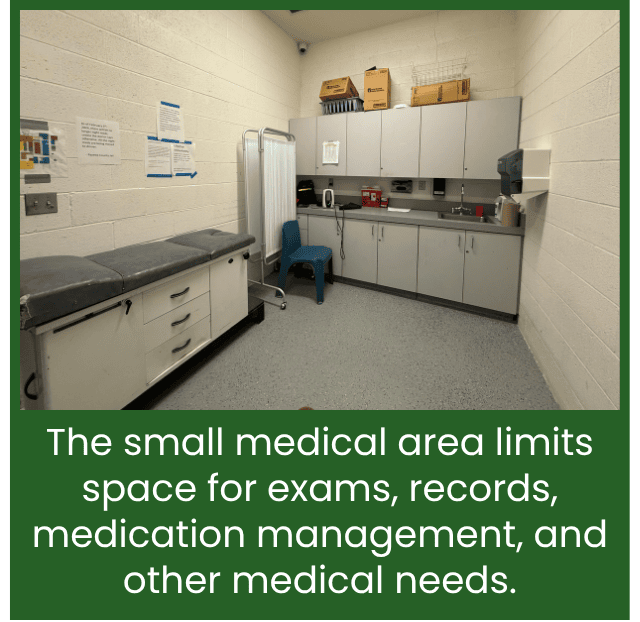
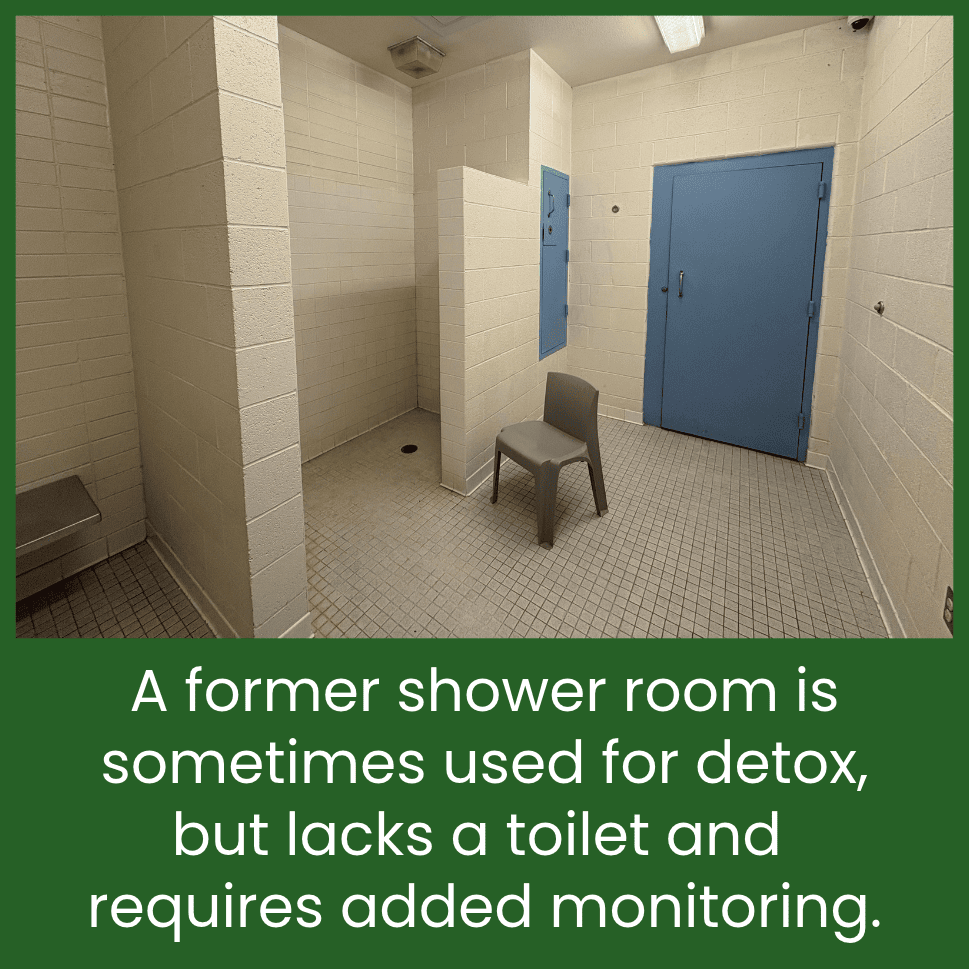
The jail does not have enough purpose-built space for inmates with mental-health, behavioral-health or substance-use needs. A former shower area is sometimes used for detox even though it has no toilet, requiring additional monitoring and movement, while the medical area provides limited space for examinations, records and medication management. These constraints place additional demands on staff and make it harder to provide care in an appropriate setting.
Security
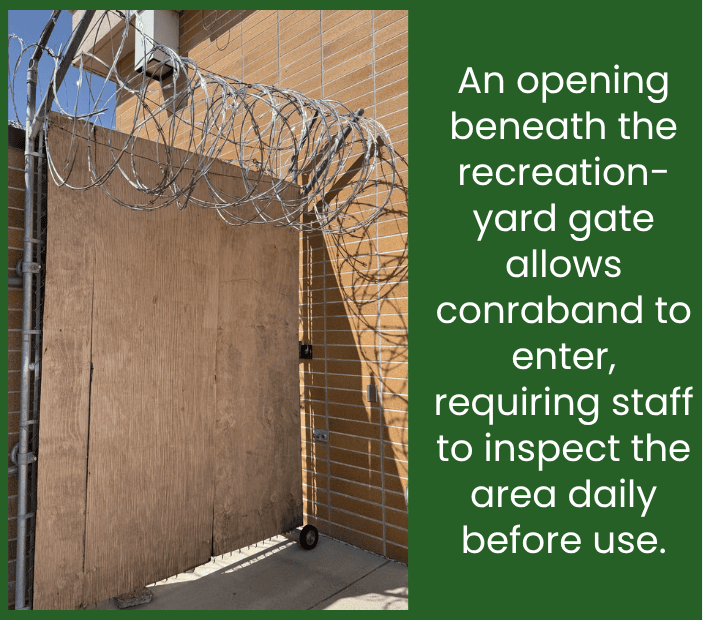
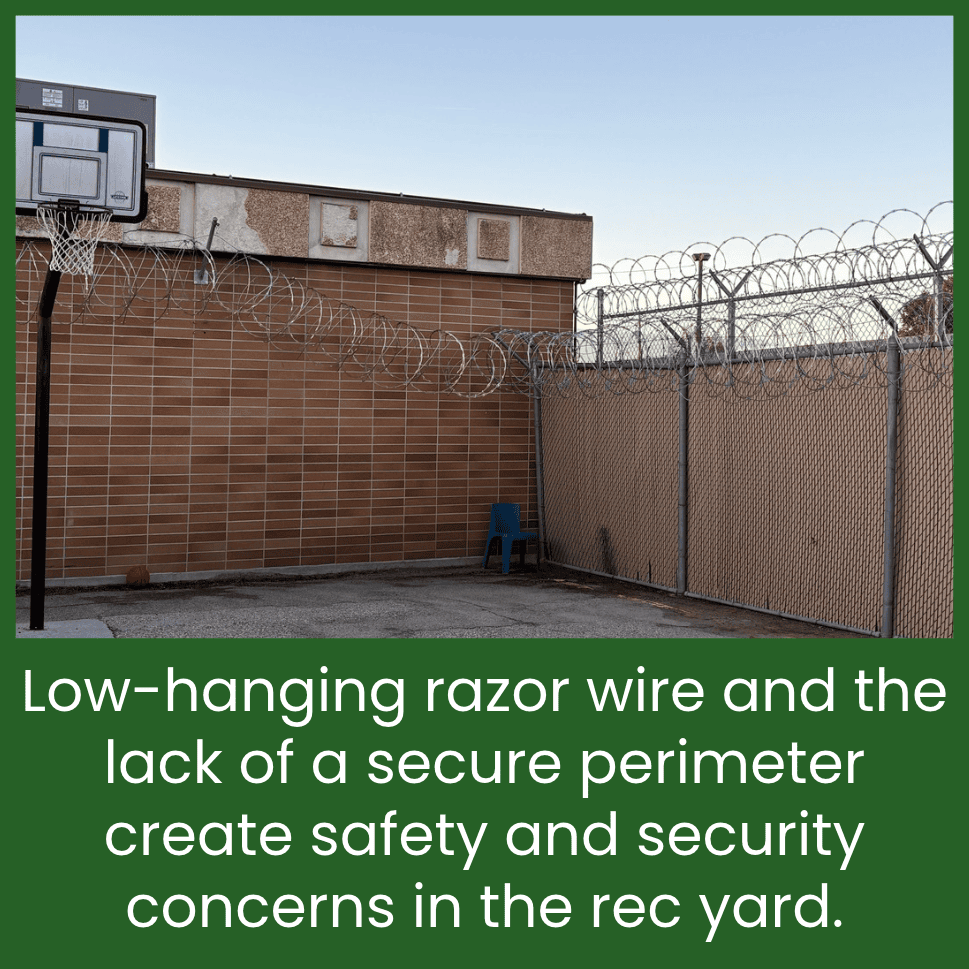
The facility lacks a modern secure perimeter, and the recreation and transportation areas require additional staff procedures to compensate for the building’s layout. Large transport vehicles cannot be fully accommodated inside the sallyport, and the recreation yard must be routinely checked for contraband. These conditions increase operational risk and require staff to manage security concerns that would normally be addressed through facility design.
Building Systems and Accessibility
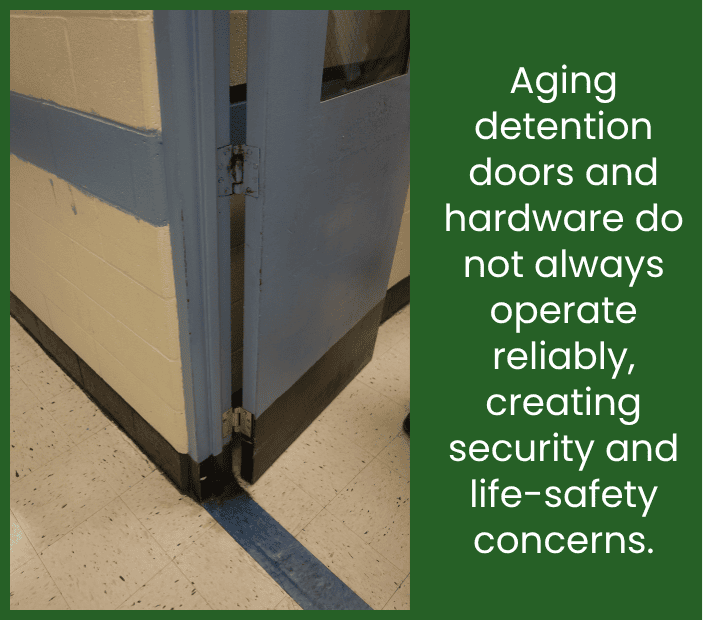
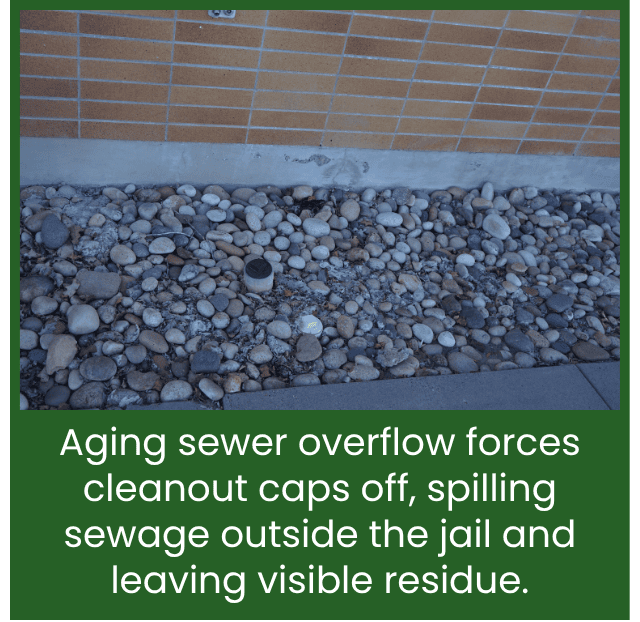
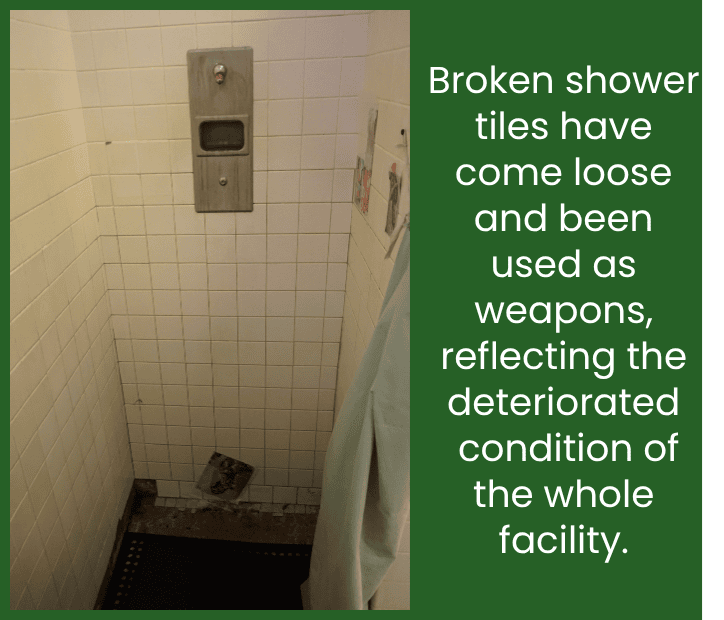
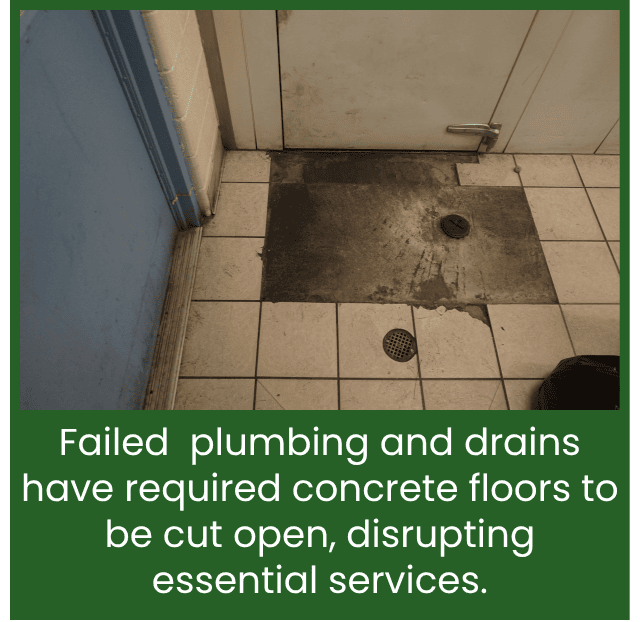
The jail requires ongoing repairs to aging plumbing, doors, laundry equipment, electrical systems and technology infrastructure. Kitchen drain failures have required concrete floors to be cut open for repairs, and older showers, narrow corridors, thresholds and door openings do not meet modern accessibility needs. These problems disrupt daily operations and require continued investment in systems that are increasingly difficult to maintain.
Why Renovation Alone Cannot Address The Challenges
Payette County continues to repair and maintain the existing jail. Recent work has included repairing plumbing, replacing fixtures, improving electrical wiring, maintaining doors and making other improvements where possible.
These repairs are important for keeping the facility operating, but they do not address many of the jail's fundamental limitations.
Routine maintenance cannot widen the original corridors, create additional housing areas for different inmate classifications, enlarge the booking area, improve the overall building layout, create modern staff sightlines, add sufficient secure transportation space or fully correct accessibility limitations throughout the structure.
In many areas, staff are adapting spaces that were designed for entirely different purposes or adding modern systems to a building constructed more than 50 years ago. The Elevatus study concluded that many of the jail's most significant deficiencies are tied to the size, configuration and physical structure of the facility and cannot be fully corrected through renovation alone.
Payette County Jail Inspection Reports
Payette County Jail in the Media
Payette County Jail and Courthouse Tour
Payette County Jail Facility Townhall #1
Payette County Jail Facility Townhall #2
Sheriff Creech on The Ranch Podcast
Sheriff Creech on The Ranch Podcast
Jail Overcrowding – Idaho Reports